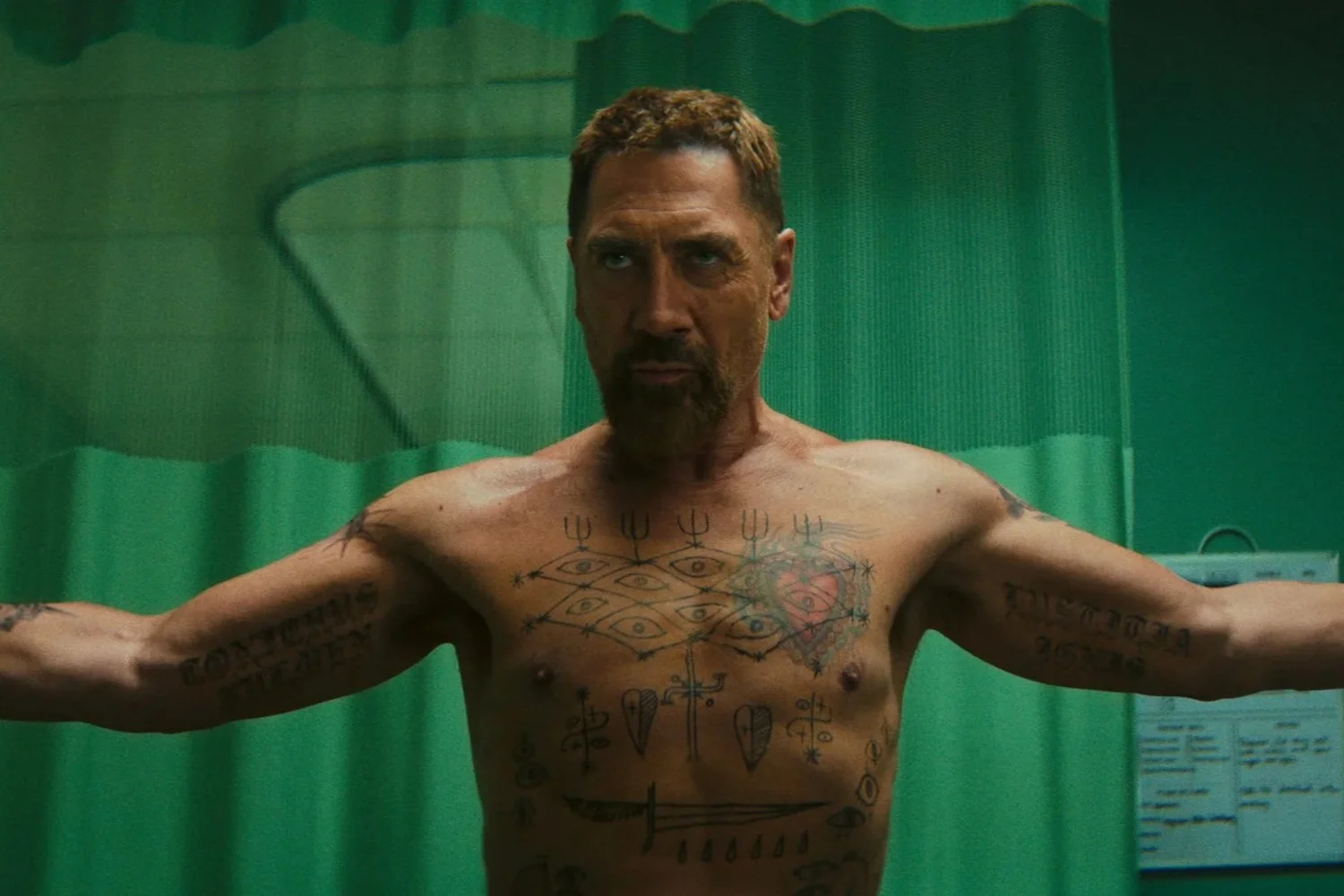
Apple TV’s Cape Fear has finished its first season, closing out one of the streaming service’s most ambitious psychological thrillers of 2026.
The 10-episode limited series puts Javier Bardem in the role of Max Cady, the notorious criminal at the center of the story, opposite Amy Adams and Patrick Wilson as attorneys Anna and Tom Bowden. Created by Nick Antosca, the series is inspired by both John D. MacDonald’s novel The Executioners and Martin Scorsese’s acclaimed 1991 film adaptation.
With Scorsese and Steven Spielberg serving as executive producers, Cape Fear Apple TV arrived with unusually strong Hollywood credentials. But after the finale, the bigger question is whether the series has enough staying power to become an awards contender.
The answer may depend largely on one man: Javier Bardem.
Cape Fear Apple TV Has a Standout Performance
From the beginning, Bardem’s interpretation of Max Cady has been the show’s biggest selling point.
Rather than simply recreating Robert De Niro’s infamous performance from Scorsese’s 1991 movie, Bardem brings a different energy to the character. His Cady can be charming, unsettling and unpredictable, often shifting between apparent vulnerability and outright menace.
That performance has been repeatedly singled out by critics.
Collider gave the series a 90/100 score and praised Bardem’s performance as a central reason for its success, while Metacritic currently lists Cape Fear at 68/100 from 30 professional reviews. The Guardian also gave the series a perfect score, praising its ability to maintain tension even when the story pushes toward increasingly extreme territory.
The critical response isn’t unanimous, but Bardem’s performance has emerged as the clearest point of consensus.
That matters during awards season.
A Familiar Story With a Much Bigger Canvas
The biggest challenge facing Cape Fear was always going to be its source material.
Scorsese’s 1991 film is one of the best-known psychological thrillers of its era, while the original 1962 movie remains highly regarded. Both films were themselves based on MacDonald’s 1957 novel.
Instead of attempting to simply stretch the 1991 movie across 10 episodes, Antosca’s series expands the mythology surrounding Max Cady and the Bowden family.
The additional running time allows the story to explore relationships, motivations and family secrets that could only receive limited attention in a feature film.
Apple officially describes the series as a psychological horror thriller in which Max Cady is released from prison and seeks revenge against Anna and Tom Bowden, the attorneys responsible for putting him behind bars.
That expanded structure is both the show’s strength and its greatest risk.
A feature film can maintain relentless momentum for two hours. A 10-hour series has to continually justify its existence.
Amy Adams Gives the Story a New Center
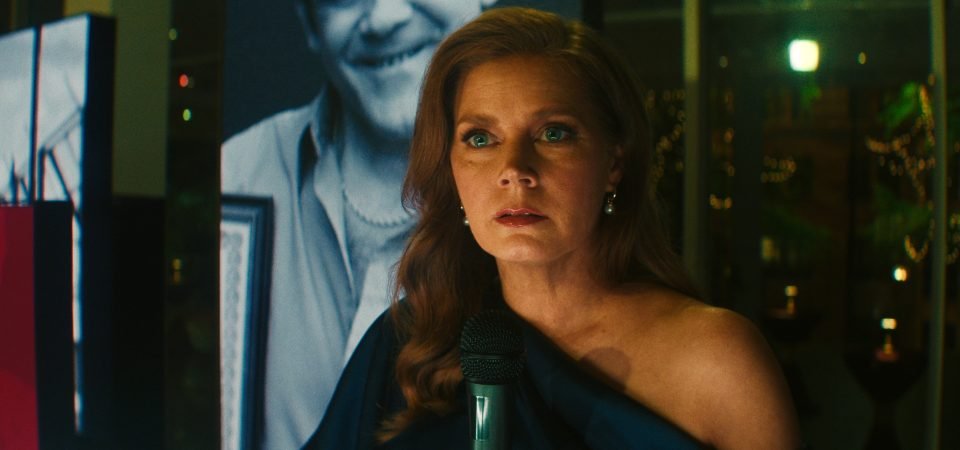
Amy Adams plays Anna Bowden, giving the series another major dramatic presence.
The character is not simply the frightened wife from the traditional version of the story. The television adaptation gives Anna greater agency and places more emphasis on the moral decisions that helped create the conflict with Cady.
That makes the central conflict more complicated.
Instead of presenting Cady as the only source of danger, the series gradually asks viewers to consider the consequences of the Bowdens’ own decisions.
Adams has the difficult task of playing a character whose actions can be morally uncomfortable while still keeping the audience emotionally invested.
That complexity is part of what separates the television version from a straightforward remake.
The Scorsese and Spielberg Connection Matters
Few modern television projects arrive with this kind of pedigree.
Martin Scorsese directed the 1991 Cape Fear, while Steven Spielberg produced that film. Both returned as executive producers for Apple’s new adaptation.
The series itself comes from Nick Antosca, who serves as creator, showrunner and executive producer.
Apple also assembled an impressive directing team, with Morten Tyldum, S.J. Clarkson, Amanda Marsalis and Reed Morano among the directors credited on the project.
That combination gives Cape Fear the feel of prestige television rather than a conventional streaming remake.
It also raises expectations.
When a project carries the names of Scorsese and Spielberg, viewers naturally expect more than familiar characters and expensive production design.
Critics Were Divided on the Series, But Not Dismissive
The critical response to Cape Fear is interesting because it isn’t a simple success-or-failure story.
Metacritic currently categorizes the series as “Generally Favorable,” with a 68 Metascore based on 30 critic reviews. Nineteen reviews are positive, while 11 are mixed, with none currently categorized as negative.
That suggests a series that impressed critics in specific areas while leaving some unconvinced by its overall execution.
RogerEbert.com’s review described the show as a lurid and explicitly violent fever dream, while The Hollywood Reporter highlighted the pulpy nature of Apple’s extended adaptation.
In other words, Cape Fear isn’t universally being treated as the next great television masterpiece.
But awards contenders don’t always need universal acclaim.
They need memorable performances, strong craft and enough critical support to remain part of the conversation.
Could Javier Bardem Be an Emmy Contender?
This is where the conversation becomes particularly interesting.
Awards predictions are inherently uncertain, and no Emmy nomination has been guaranteed. However, Bardem has a legitimate argument for consideration based on the critical response to his performance.
The role gives him a substantial dramatic showcase and allows him to move between psychological menace, vulnerability and unpredictability.
The series also benefits from the fact that Max Cady is an instantly recognizable character with a long cinematic history.
That creates a useful awards narrative: Bardem isn’t simply playing a famous villain again. He’s offering a new interpretation of a character previously associated with one of Robert De Niro’s most memorable performances.
Recent awards coverage has already identified Cape Fear as a possible player for the 2027 Emmys, particularly in acting categories. Gold Derby has specifically examined the show’s awards prospects following its finale.
Whether that momentum survives into nominations remains to be seen.
The Juliette Lewis Connection Adds Another Layer
One of the most intriguing pieces of the new Cape Fear is its connection to the 1991 film.
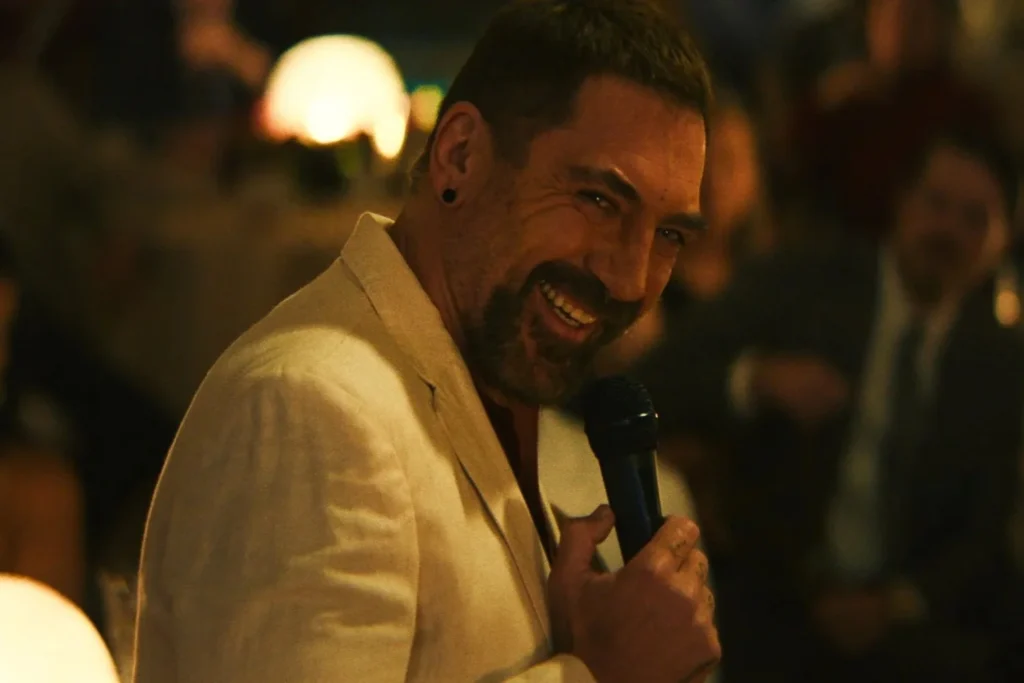
Juliette Lewis, who played Danielle Bowden in Scorsese’s version, appears in the new series as Crystal, a completely different character.
Her involvement was kept secret for much of the show’s rollout, with Lewis reportedly absent from the initial promotional campaign and credits designed to preserve the surprise.
It’s a clever connection to the original movie without turning the new series into a conventional legacy sequel.
Instead, Cape Fear uses its history as part of its identity while attempting to establish its own version of the story.
Where Does Cape Fear Go From Here?
For now, Cape Fear remains a limited series, and Apple has not confirmed a second season.
That may ultimately be the right decision.
The show’s story was designed around a contained conflict, and extending it simply because the first season attracted attention could weaken the impact of what made the series distinctive.
The finale also leaves some questions that could theoretically support another chapter, but those unresolved elements don’t automatically mean a second season is coming. Recent coverage has noted the possibility while emphasizing that no continuation has been confirmed.
For Apple, the more important question may be what Cape Fear contributes to the platform’s growing reputation for prestige television.
The Verdict on Cape Fear
CAPE FEAR was never going to escape comparisons with Scorsese’s 1991 film.
It didn’t need to.
The more interesting achievement is that Apple and Antosca found a way to take a familiar psychological thriller and expand it into a character-driven limited series with its own identity.
The results are uneven, and the critical response reflects that. But the show’s strongest elements are difficult to ignore: a committed cast, striking visual filmmaking, a complicated reworking of familiar characters and, above all, a commanding performance from Javier Bardem.
Whether Cape Fear ultimately becomes an Emmy nominee is impossible to know yet.
But if the awards conversation comes down to the performances that audiences are still talking about months later, Bardem’s Max Cady deserves to be in that conversation.
For a series built around fear, obsession and revenge, that’s a pretty fitting legacy.